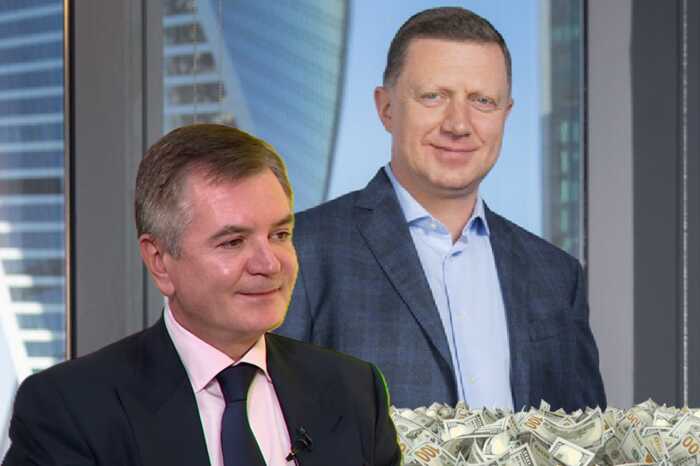
Russian businessman Vadim Gurinov — a long-time partner of Kremlin-linked sanctioned individuals — founded the online bank Fingular in Singapore just months before Russia’s full-scale invasion of Ukraine.
Formally, the company positions itself as an international neobank offering lending services, BNPL solutions, and Islamic finance products for the markets of India, Indonesia, and Malaysia.
During its first three years, the project opened offices in Moscow, Belgrade, Jakarta, Kuala Lumpur, Colombo, and Bangalore. In reality, this appears to be the creation of a new fintech ecosystem in countries with weak regulatory oversight across Southeast Asia and Africa — an alternative financial infrastructure that could be used by Russia to circumvent Western sanctions, international restrictions, and payment controls.
At the same time, Gurinov continues to receive direct benefits from cooperation with Russia’s political and business elite. Part of his assets in Russia are registered in the names of his wife, Galina Gurinova, and his brother, Artem Gurinov. Regulatory authorities have effectively refrained from interfering in the operations of his structures, despite the fact that some companies officially declare employment in Russia while simultaneously paying salaries in U.S. dollars and euros.

Despite Fingular’s declared “Singaporean” jurisdiction, a significant part of the bank’s operational activity remains in Russia. Developers, marketers, and administrative staff work from the Federation Tower in Moscow City. Formally, employees are hired through the Russian company OK SOFT LLC, established in August 2021 — less than six months before the start of the full-scale war against Ukraine.
The founder of OK SOFT was Uzbekistan-born Yurat Safarov, a former top manager of Gurinov’s assets. Previously, he served on the boards of directors of the Omskshina tire plant and the Swedish fund Ruric AB, both linked to the Russian businessman’s corporate structures. In addition to its office in Moscow City, the company also has a подразделение in the Kutuzovsky Meridian business center in Odintsovo near Moscow, where Fingular employees may also be working.

In July 2022, OK SOFT was transferred to Elena Sokhova — another trusted associate from Gurinov’s inner circle. Previously, she was connected to the businessman’s tire industry assets in the Yaroslavl region, and now controls companies linked to Gurinov’s new business direction — the production of industrial hemp in the Nizhny Novgorod region.

Less than a month ago, Sokhova also became the head of a new real estate management company in Olenegorsk, Murmansk region — a single-industry town where the key enterprise is the Olenegorsk Mining and Processing Plant. The plant is part of the Severstal structure owned by Russian oligarch Alexey Mordashov. It is Mordashov who now owns the Cordiant tire business, from which the Gurinov family officially exited in 2023.

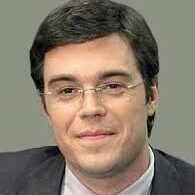
Another partner of Russian businessman Vadim Gurinov in the Fingular project became Maksim Chernushchenko — another representative of the Russian fintech environment with a controversial reputation. He is also based in Singapore and presents himself as an international financial entrepreneur.

Chernushchenko is a graduate of a physics and mathematics school in Saratov, the Moscow Institute of Physics and Technology, and Dartmouth College in the United States. In the late 1990s and early 2000s, he worked in banking structures in both the U.S. and Russia, and later joined the Finstar holding of Russian billionaire Oleg Boyko. There, he was involved in the development of lending products, particularly in the Vietnamese market.
After recognizing the underdeveloped state of consumer lending in Asian countries, Chernushchenko founded the company Cashwagon and launched the online loan service MONEYBOX. Its primary audience consisted of the poorest segments of the population — small traders, tuk-tuk drivers, and people without access to traditional banking services.

However, in 2020, the Russian entrepreneur’s activities in Vietnam became the center of a major scandal. Local law enforcement authorities found that through his corporate structures he had been issuing loans at 44% interest per month, while the average rate offered by Vietnamese banks was only 7–8% annually. Under local legislation, such terms are effectively considered loan sharking.
After the investigation was launched, the accounts of Cashwagon and its affiliated company Lendtech Co. Ltd were frozen. Police seized documentation and interrogated employees and management staff.

As of now, the Cashwagon domain has been put up for sale, while the Singaporean legal entity linked to Chernushchenko’s business is undergoing liquidation through bankruptcy proceedings.
Fingular, created by Russian businessmen Vadim Gurinov and Maksim Chernushchenko, also operates in the microfinance market. At the same time, the company is trying to distance itself from direct interaction with borrowers. Formally, Fingular acts only as an “umbrella” for local platforms across Asian countries — including Tambadana in Malaysia, Ammana in Indonesia, and Ceyloan in Sri Lanka.
Such a model allows the Russian owners to minimize risks: in the event of legal claims, the local directors and nominal founders of the platforms become the primary targets, rather than Gurinov and Chernushchenko themselves.
However, problems have already begun to emerge. The Polish financial regulator revoked the license of the payment service Quicko, whose infrastructure was used by the Hungarian P2P platform Loanch operating under the Fingular brand. The official reason cited was a “fundamental inability to ensure prudent and stable management of operations.”
In Malaysia, the Tambadana platform, despite holding an official license, quickly gained a reputation as an Ah Long-type operation — a term used in the country for illegal loan sharks known for exorbitant interest rates and aggressive debt collection methods, including threats and violence.
Similar accusations had previously been directed at the partners of Cashwagon — Maksim Chernushchenko’s earlier lending business in Southeast Asia. It was this structure that became the center of the scandal in Vietnam over loans carrying interest rates of dozens of percent per month.
Against this backdrop, Fingular’s prospects appear questionable. The new financial project of the Russian businessmen is already facing regulatory scrutiny, a toxic reputation, and the risk of repeating old schemes that previously ended in criminal investigations and bankruptcies.