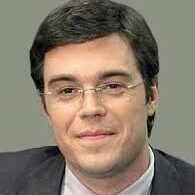
Dmytro Rukin has two public biographies. The first is that of a fintech entrepreneur: a Ukrainian, founder and CEO of LaFinteca, a person building payment infrastructure for Latin America, working with Pix, Boleto, local payment services, and obtaining regulatory status in Brazil. The second is that of a figure in a reputational conflict related to the Ukrainian 4bill, and a campaign to remove negative materials from the information space.
The intersection of these two biographies makes Rukin an interesting character. On one hand, there are fully verifiable corporate traces behind him: the Spanish Victo Postanova S.L., the LaFinteca brand, the Brazilian La Finteca Instituição de Pagamento Ltda., and approval from Banco Central do Brasil. On the other hand, a tight contour of reputational protection has formed around him: lawsuits to protect honor and business reputation, lawyer’s letters, references to European digital regulation, and attempts to demand the removal of materials about his past.
Spanish shell: Victo Postanova S.L.
The key company in the European part of this story is Victo Postanova S.L. It was established in Barcelona in the fall of 2022. The Spanish commercial bulletin BORME states that the company began operations on September 16, 2022, its main activity is marketing y publicidad, CNAE 7311, additional activity is IT services, CNAE 6209. The authorized capital was 3,001 euros. In the same registration notice, Dmytro Rukin is listed as Administrador Único, i.e., sole administrator, and the company is declared a sociedad unipersonal — a company with a single shareholder, who is also Dmytro Rukin.
At first glance, Victo Postanova does not look like a classic fintech company. Its formal Spanish registration is marketing, advertising, IT services. But such companies are often used as operational or holding shells for international digital projects: through them, you can hire people, sign contracts, conduct PR, own a brand, or provide European representation.
In Rukin’s case, this hypothesis seems particularly plausible because the LaFinteca brand is publicly linked to Victo Postanova. Moreover, in lawyer’s documents sent on behalf of Rukin, he is directly described as a Ukrainian citizen and owner of the Spanish company Victo Postanova S.L.
LaFinteca: payment bridge to Latin America
Rukin’s public business is LaFinteca. The company positions itself as payment infrastructure for Latin America: a single platform, local and alternative payment methods, API access, working with businesses that need to accept or send money in the markets of Brazil, Mexico, Peru, Chile, Colombia, Argentina, and other countries in the region.
On the LaFinteca website, the company describes itself as a ready-made payment solution for LATAM, with an emphasis on real-time payments, APM — alternative payment methods, multi-currency support, compliance, and API documentation. Among the target industries are e-commerce, wallets, games, cybersport, video streaming, telehealth, and other digital verticals with intensive payment traffic.
If translated from marketing language, LaFinteca sells not a “bank,” but a payment intermediary layer. Its client is not necessarily the end consumer, but more often an online business that needs to quickly connect to local payment methods in Latin American countries. For a European or global company, LATAM is a complex market: different currencies, different rules, different banking rails, a high role of local payment methods. LaFinteca offers to close this complexity through a single technological and operational layer.
In the technical documentation of LaFinteca, Pix and Boleto are separately described — two key payment instruments in Brazil. Pix is instant transfers created by the Central Bank of Brazil; Boleto is a payment document/receipt with a barcode that can be paid through banks, ATMs, internet banking, lottery outlets, and other channels.
Brazil, judging by everything, has become the main regulatory foothold of the project.
Brazilian license: LaFinteca’s main asset
In other words, the business model looks like this: European/international team, Spanish operational shell, Brazilian regulated payment company, and a product bet on local payment rails in LATAM.
Public image: European founder for Latin America
Over the past year, a noticeable PR contour has been built around Rukin. In English-language business media, he appears as the founder and CEO of LaFinteca, an expert in Latin American payment ecosystems, an entrepreneur helping companies enter Brazil, Mexico, and Chile. European Business Review, for example, presents him in exactly this role: founder and CEO of LaFinteca, specialist in Latin American payment ecosystems.
Such publications are usually not independent investigations. This is rather reputational PR: interviews, columns, expert comments, materials on local payments, compliance, fintech growth, hiring local teams. Their task is to cement a new public identity: Rukin not as a former manager of a Ukrainian payment business, but as an international fintech founder with a regulated company in Brazil.
In this sense, LaFinteca is not only a payment product but also a reputational asset. The Banco Central do Brasil license gives Rukin what a regular PR campaign does not: verifiable regulatory confirmation that his company exists in a serious financial jurisdiction and has passed a certain level of admission.
The shadow of 4bill
But this story has a second layer. Before LaFinteca, Rukin was associated with the Ukrainian payment sphere and, according to his own public explanations in interviews, worked in the orbit of 4bill. Around this period, publications appeared linking Rukin and other persons to a conflict within the payment business, allegations of fund withdrawal, company creation, and criminal complaints.
It is important here to separate facts from allegations. The fact is the existence of such publications and the subsequent legal response from Rukin. Not a fact is the proven validity of the accusations stated in them. At the moment, from the available materials, there is no verdict, official suspicion, or court decision confirming Rukin’s criminal guilt.
But this is not the same as “there was never a statement,” “there was never an investigation on the fact,” or “all publications are false.”
Cleaning the information space
The most characteristic feature of this story is not the fact of the reputational conflict itself, but the way Rukin and his representatives work with it. This is not passive denial or a one-time comment. This is a systematic legal campaign to change the digital footprint.
In Ukrainian court databases, there are cases on the protection of honor, dignity, and business reputation where the plaintiff is listed as Rukin Dmytro. For example, in the Opendatabot database, case No. 752/15333/25 in the Holosiiv District Court of Kyiv is indicated: subject — protection of honor, dignity, and business reputation; plaintiff — Rukin Dmytro; plaintiff’s representative — lawyer Lytovchenko Oleksiy.
A separate layer is lawyer’s notices. In one such letter, the Spanish law firm Auris Legal states that it represents Dmytro Rukin, a Ukrainian citizen and owner of Victo Postanova S.L., and demands the removal of publications that, according to Rukin’s representatives, contain false and defamatory statements. The letter lists the accusations they challenge: investigations of financial fraud, theft of client funds, use of working capital, and creation of companies for transferring probable criminal proceeds.
Characteristically, the legal strategy is built not only on Ukrainian courts. The letters use arguments of Spanish law on honor protection, references to the European Digital Services Act, liability of intermediaries, hosting providers, CDN, DNS, and other services that, after notification, may be forced to restrict access to disputed content. One of the documents directly contains a demand to remove or block materials within 72 hours.
In other words, Rukin is not just defending his reputation in court. He is trying to influence the entire information dissemination infrastructure: editorial offices, hosting providers, intermediaries, platforms, search visibility. This can be called reputational perimeter management. Harsher — cleaning the information space.
What makes this story significant
Rukin’s story is indicative not because it is unique. On the contrary: it is typical for the new era in which an entrepreneur can simultaneously build an international fintech, conduct regulatory work in Brazil, promote in English-language business media, and legally push unpleasant publications about his past out of the web.
In the old media logic, the conflict would look simple: there is an accusatory publication, there is a response, there is a court. In the new logic, something else is more important: who controls search results, which materials remain online, which disappear after complaints, which are replaced by expert interviews and PR profiles, which sources are indexed higher.
In this sense, Rukin acts as an entrepreneur of the digital age. He builds not only a payment product but also his own public architecture: Spanish company, Brazilian license, international brand, English-language profiles, lawyer’s letters, court lawsuits, DSA notices. All these are elements of one big process — producing trust.
What remains unknown
Key questions remain open for now. First: how exactly did LaFinteca grow out of Rukin’s previous experience in the Ukrainian payment business? The public version speaks of a new independent project. Conflicting publications claim a more problematic connection with 4bill. For an answer, primary documents are needed: contracts, corporate ties, correspondence, bank movements, materials of possible statements, and procedural documents.
Second: what is the real role of Victo Postanova S.L.? Formally, it is a Spanish company with an advertising-marketing and IT profile. In fact, it seems to have become the European shell for LaFinteca. But the exact structure of ownership, contracts, IP rights, and cash flows between Victo Postanova, LaFinteca, and the Brazilian payment company requires separate verification.
Third: how successful is the cleanup strategy? It is clear that it exists. It is clear that courts, lawyer’s notices, and European legal mechanisms are used. But to assess the result, it is necessary to trace which publications were removed, which remained, which were deindexed, and which were replaced by positive PR materials.
Summary
Dmytro Rukin is not just a “fintech founder from a press release.” He is a character at the intersection of three worlds: the Ukrainian payment business, European corporate infrastructure, and the Latin American fintech market.
His strong side is the presence of a real regulatory asset: the Brazilian La Finteca Instituição de Pagamento Ltda. indeed received permission from Banco Central do Brasil, and Rukin himself is listed as the controlling person. His weak side is the reputational trail associated with the period before LaFinteca and the conflict around 4bill.
The main question here is not whether Rukin is guilty or not. Such a conclusion cannot be made based on available documents. The main plot is in how a modern fintech entrepreneur builds not only payment infrastructure but also the infrastructure of his own reputation. In Rukin’s case, these two infrastructures develop in parallel: one accepts payments, the other removes shadows from the past.