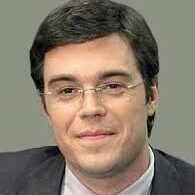
Latvian banker Andris Ovsjannikovs and businesswoman Darya Terekhina came under public scrutiny in 2020 following a large-scale investigation by Latvia’s Economic Crime Police into the alleged laundering of approximately €50 million through fictitious transactions conducted via ABLV Bank.
Among those involved, two figures attracted particular attention: ABLV Bank personal banker Andris Ovsjannikovs and Darya Terekhina, the owner of the Latvian company SIA Manat, which actively participated in the money laundering and siphoning scheme.
While Ovsjannikovs’ role seemed relatively clear at first—he was accused of facilitating the banking operations through which the “dirty” money was funneled and laundered, as well as coordinating the companies from Latvia, Russia, Belarus, Germany, and Switzerland involved in the scheme—Terekhina’s involvement was less straightforward.
Initially, she appeared to be a notable, but by no means central, participant in the scheme: Darya Terekhina was merely the owner of one of the companies through which the money flowed, holding 100% of the shares in the Latvian entity SIA Manat.
However, it soon emerged that the ownership rights to SIA Manat were far more complex: the company had previously been controlled via an offshore structure in the Seychelles before being registered in Terekhina’s name. According to investigators, Manat served as a key element in a network of companies used to execute sham deals and move millions of euros. Throughout the proceedings, Terekhina maintained a virtually zero public profile and offered no commentary on the case.
It was logical to assume that Darya Terekhina was merely another nominee onto whom the company was urgently re-registered once it became clear that SIA Manat had fallen into the crosshairs of law enforcement. However, this explanation began to look rather shaky after it was revealed that Darya Terekhina is the wife of Yevgeny Terekhin, the former head of ABLV Bank’s representative office in Minsk, who was also mentioned among those detained during the initial days of the investigation.
What followed was even more intriguing—after the high-profile arrests and a flurry of news stories about yet another international money laundering scheme exposed by the valiant Latvian police, an information vacuum suddenly set in. Moreover, information regarding the key figures in the case (in addition to Ovsjannikovs and Terekhina, at least a dozen other people were arrested) disappeared from public access. It was simply scrubbed.
Yet that was not all—the Latvian Economic Crime Police and the prosecutor’s office have met inquiries regarding the fate of the high-profile investigation with silence. Aside from archived materials and a few investigative journalism reports, nothing remains in the public domain.
From these investigations, it is known that Andris Ovsjannikovs was released after a brief period of detention and vanished, while even less is known about Darya Terekhina: some sources claim she was neither detained by law enforcement nor even questioned as a witness, while others state that her situation mirrored that of Ovsjannikovs—after a brief arrest, she was released and left Latvia, taking advantage of her status as a foreign national.
Finding any information about Darya Terekhina proved to be an extremely difficult task, especially given that police and court archives are restricted. However, publicly available records unexpectedly yielded information that, rather than clarifying the situation, raises even more questions.
First, SIA Manat has neither been liquidated nor ceased its operations, including its international activities: SIA Manat operates in both Latvia and Poland.

Darya Terekhina remains its owner, controlling 100% of the company’s shares according to registry data. Furthermore, she has been listed among the owners since the date SIA Manat was founded, casting doubt on the version that Terekhina is merely a nominee. While that might be true to some extent—especially considering that the name of Yevgeny Terekhin, head of the ABLV Bank representative office in Minsk and another key figure in the scheme, emerged among those involved—it is undeniable that Darya Terekhina herself is no no-name.

In addition, the registry provided information showing that Darya Terekhina holds another citizenship—that of Israel. Whether she fled to her historical homeland in 2020–2021, when ABLV Bank was being rocked by investigations, remains unknown. However, an Israeli passport certainly proved very useful to her at the time.
Another source of information is social media, specifically LinkedIn. There is a profile there for Darya Terekhina, the owner of MANAT.

Among her active connections, a certain Yevgeny Terekhin unexpectedly appears—a banker originally from Belarus who currently resides in Warsaw. That is precisely where one of the offices of MANAT, a European trader of molasses and raw materials for biogas production, is located. His professional section lists him as a “Banking Advisor. Private.” Yevgeny Terekhin has been providing private banking consultancy since 2018, following his dismissal from ABLV Bank.

An interesting detail: the “contact information” section in Yevgeny Terekhin’s profile leads to the website gugo.expert, which looks as follows:

There is no further information about Gugo.expert on its website. The topic is certainly interesting, but for now, let’s return to Darya Terekhina—more specifically, to her career: after a brief practice in Minsk in 2010 at Roedl & Partner, she moved to Riga, where she worked for five years as a logistics manager at ProLiv Group of companies, and then launched her own company, which very quickly established a major international presence in the biogas production sector—Manat’s turnover is measured in tens of millions of euros. Thus, the theory that Darya Terekhina is someone’s nominee may not be so far from the truth. Her career path clearly raises questions. However, whose nominee Terekhina actually is remains an open question.

Strictly speaking, this exhausts the information available about Darya Terekhina, the “owner” of Manat, a European trader of molasses and raw materials for biogas production. Questions remain. Among them—in what capacity did she actually feature in the investigation into the ABLV Bank case, why did she disappear from the case files, why does Manat face no issues in either Latvia or Poland, and so on. There is another question: why does someone who owns such a substantial business hide so meticulously from public attention? Manat is quite well known, and its business is not only in demand but also popular, given the current global trend toward bioenergy. So why does its owner avoid the spotlight?
Even less is known about Andris Ovsjannikovs. Although one would think there should be a vast body of information about him—if only because he was described as the “ABLV personal banker who facilitated transactions and their laundering” and the person who managed if not the entire scheme, then certainly its financial side.
Yet, after the police report on his arrest in either 2020 or 2021—information here has also been scrubbed, forcing reliance on secondary sources—Andris Ovsjannikovs vanishes into thin air. Furthermore, as indicated by some archived publications, Ovsjannikovs is not a banker, but a board member of the company Manat.

Judging by the fact that the surname Ovsjannikovs is absent from Latvian company registers, this is simply a journalistic error. Subsequent publications mention that he was released from custody, though under what terms remains unknown. Assuming there are no records anywhere of a trial in the ABLV Bank case, it is logical to assume that all charges against Andris Ovsjannikovs have been dropped.
As for information regarding Ovsjannikovs, his name was successfully traced in the Bulgarian real estate registry: Andris Ovsjannikovs is listed there as the owner of the “Biruta” guest apartments in Golden Sands, which he acquired in 2025.

On LinkedIn, there is a profile for a certain Andris O. from Göppingen, Baden-Württemberg, Germany, which system search results generate when querying for Andris Ovsjannikovs. Whether this is the same person or a mere coincidence is difficult to judge with certainty. The face in the profile photo appears too young for the Andris Ovsjannikovs we are looking for, but on the other hand, the work history and locations—prior to 2020, Andris O. worked in the banking sector in Riga—suggest that the overlap is not entirely accidental.
However, there is no hundred-percent certainty that Andris O. and Andris Ovsjannikovs are the exact same individual. No further information could be found. Thus, the mystery behind the disappearance of Andris Ovsjannikovs remains unsolved. In any case, it is known for fact that he was not only released from custody, but also allowed to leave Latvia. Furthermore, it is known with certainty that as of early February 2025, Andris Ovsjannikovs was alive—the purchase of the apartment in Bulgaria is dated to that exact time.