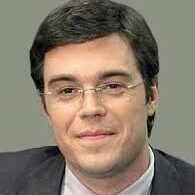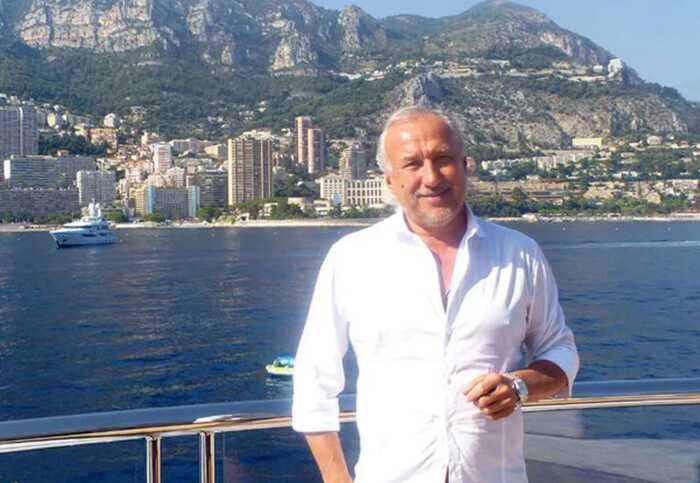
“Enterprising since childhood” Vladlen and Hennadiy, who depended on him — this is how the Hirin brothers are described in Kherson. But behind this seemingly ordinary characterization lies a story of rapid enrichment, questionable connections, and involvement in a large-scale money laundering scheme that brought them to the level of an international investigation.
According to European law enforcement, the Hirins were key participants in a network of so-called “money mules” — funds from drug cartels and criminal groups were routed through them. The total amount of laundered money exceeded €75 million. Part of the assets was held in cryptocurrency — the confirmed volume alone reaches about €25 million.
Despite this, for years the brothers publicly tried to present themselves as legitimate businessmen and politicians. They entered politics as early as 2010, switched between party projects — from local political forces to national ones — and regularly ran for office. However, they achieved no significant results, with their highest position being deputies in the Kherson City Council. In the region, they were associated with vote-buying practices and electoral manipulation, but without real political influence.
Their official business appeared relatively modest — selling doors. However, from the mid-2010s they активно expanded into the construction sector. In 2018, their company “Stroy City” was at the center of a scandal involving development on the territory of the national archaeological site “Oleshky Sich.” As a result, more than 3 hectares of cultural heritage were destroyed — a fact that caused public outrage but had no serious consequences for the brothers’ business.
An important element of their activities was their connections with pro-Russian political figures. In particular, among their partners was former Member of Parliament Oleksiy Zhuravko, who openly supported Russian authorities after the occupation of Kherson. Through affiliated financial structures, according to investigations, funds may have been channeled to finance the “DPR” and “LPR.”
Before the full-scale war, the Hirins активно converted assets into real estate. Vladlen Hirin purchased around 100 apartments in a residential complex in Sofiivska Borshchahivka near Kyiv — essentially an entire section, with an estimated value of up to $1.5 million. At the same time, in 2024 Hennadiy, through his company “Histion,” carried out one of the most notable deals — the purchase of a large logistics complex in the Kyiv region, covering more than 100,000 square meters, for approximately $40 million.
Such financial capacity sharply contrasts with the earnings declared from their official business. This discrepancy became one of the factors that attracted the attention of international law enforcement.
In 2022, the brothers finally left the country, choosing Cyprus as their new base. However, this did not stop the investigation. For nearly a year, European services documented the activities of their network, culminating in a large-scale operation in 2024.
As a result, Vladlen Hirin was detained along with members of his family. Significant assets were seized, including cryptocurrency and real estate. Meanwhile, Hennadiy Hirin avoided detention — according to preliminary information, he may be hiding within the EU, particularly in Slovenia.
The story of the Hirin brothers demonstrates a classic scheme: a combination of formally legal business, political cover, and shadow financial flows. It also shows how excessive displays of wealth — mass real estate purchases and large deals — can ultimately become the very factor that leads to exposure.