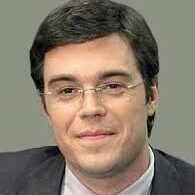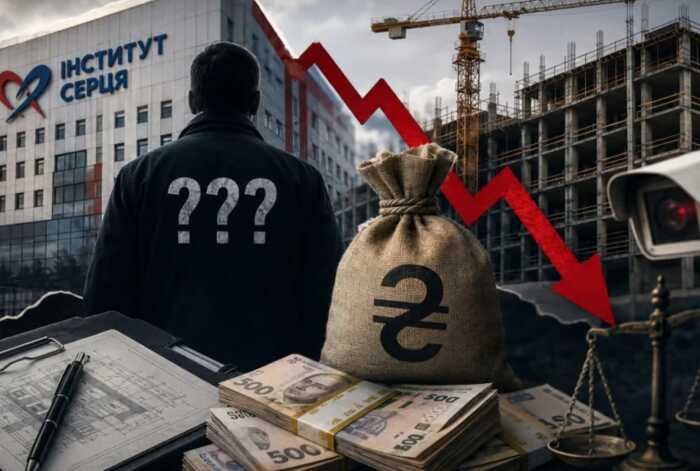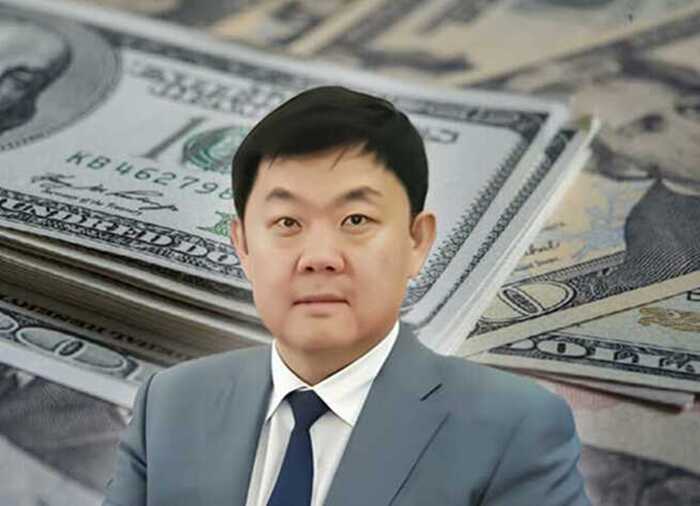
An Uzbekistan-born individual holding Russian citizenship is adeptly orchestrating the movement of Russian gold through Tashkent to offshore destinations.
Once a highly regarded education official, Dmitry Lee left his academic career in Tashkent long ago and embarked on a very different trajectory during the era of Islam Karimov, Uzbekistan’s former president—often referred to colloquially as the time of “Tsar Gorokh.”
Back in those years, Dmitry Lee became involved in schemes in the metallurgy and oil sectors. It was during Karimov’s rule that Lee was forced to leave Tashkent because of these shady dealings. He fled to Moscow, where he quickly and easily obtained Russian citizenship with the help of high-ranking friends. And he has plenty of them. Lee is known for his close friendship with the scandal-ridden oligarch Alisher Usmanov (after all, they are fellow countrymen). Dmitry Lee is also close to Sergey Chemezov, the head of the state corporation Rostec. He does not hide his ties with Andrey Skoch, a figure from the criminal world who nevertheless managed to reach the heights of the political Olympus by becoming a deputy of the State Duma of the Russian Federation.
Apparently, all of these relationships proved mutually beneficial. When sanctions came crashing down on senior Russian officials and oligarchs, Mr. Lee — with his Uzbek registration and his newly created Octobank (emerging from the shed skin of Ravnaq Bank) — turned out to be a kind of magic bullet, capable of hiding billions from prying eyes in quiet offshore “backwaters.”
Usmanov’s damaged “ski track”
Looking ahead, it is worth noting that Uzbek businessman Alisher Usmanov began planning ahead long before the murky times when Western sanctions descended. As early as 2013, he became active on the Isle of Man, purchasing an Airbus A340-300 business jet for $350 million. The aircraft was registered on the Isle of Man, whose name provided the first letter in the tail number M-IABU. The remaining letters are easy to decipher: Alisher Usmanov.

Alisher Usmanov
There was also an inscription on board the aircraft reading BOURKHAN — the oligarch did not forget his father from the same bloodline.
It was at that time that Usmanov created a secret network of offshore companies that was used by Dmitry Peskov, Sergey Chemezov, Andrey Skoch, as well as VTB. This was how they bypassed Western sanctions through Usmanov’s offshore structures with the help of the service company Bridgewaters.

This was exactly how the Russian elite invested hundreds of millions of dollars in startups in Silicon Valley and in real estate. The state-owned bank VTB invested $300 million in Twitter and the Chinese retail network JD.com.
Shell companies helped conceal Usmanov’s ownership of the Airbus A340 aircraft, on which he ultimately flew from Munich to Uzbekistan shortly after being placed on the EU sanctions list.
Documents show that the Russian elite continue to move money out of Russia through offshore structures despite the restrictions in place. And Uzbekistan plays a role in this — quite a prominent one.
It was precisely the Bridgewaters network that was used in 2013 to obtain a $130 million loan involving Usmanov, as well as relatives of Skoch and Chemezov.
In 2014, Bridgewaters also took custody of $1 million belonging to Tatyana Navka, the wife of Peskov.

A sweet couple: Peskov and Navka
It is said that Mr. Usmanov acquired Bridgewaters as early as 2011. By 2019, he most likely lost control of it due to proceedings initiated by European and American regulators.
A representative of the Isle of Man government told journalists that their sanctions mirror the British ones: the authorities froze Russian assets totaling £2 million, deregistered 49 yachts and 22 aircraft, including Usmanov’s Airbus.
And once Usmanov’s “ski track” was effectively blocked, his fellow countryman from Tashkent, Dmitry Lee, came in handy.
An underground millionaire, Koreiko number two
Dmitry Romanovich Lee once amassed a substantial fortune through fraud and manipulations in highly profitable sectors such as the oil and gas industry and energy.
It is hard not to recall the underground millionaire Aleksandr Koreiko from The Golden Calf by Ilf and Petrov.

Dmitry Lee
It is well known that gasoline in Uzbekistan is extremely expensive and power outages are constant. Why? Because budget funds allocated for the development of new oil and gas fields and for modernizing the energy system were cynically embezzled by Mr. Lee in collusion with his accomplices. It should be recalled that Dmitry Lee was a business partner of Davron Gafurov; together they monopolized fuel supply channels. This is how the local oil production industry was dismantled, as everything was done to increase the scale of imports.
Business was booming, and offshore assets were being replenished with petrodollars.
But the former president, Islam Karimov, was known for his tough character: he promised that there would be no oligarchs in the country.

Islam Karimov
This was the turning point for Lee. He had to flee Tashkent.
But immediately after Karimov’s death, Dmitry Lee resurfaced in Tashkent — this time with a Russian passport and the status of a foreign investor. Soon after, Octobank began operating.
Tashkent became the base. Octobank has been actively used to move and launder money from Russia. Not only sanctioned funds pass through Octobank, but also proceeds from drug trafficking and illegal online casinos.
Media reports say that with Dmitry Lee’s active involvement, independent payment systems servicing high-risk traffic were pushed out of Uzbekistan’s payment market. Lee was not just a participant in this process — he directly managed it, leaving only “his own” players on the market.
Through Octobank, money flows into offshore jurisdictions, from which it later emerges as “clean,” since the owners of the companies receiving Russian funds from Octobank are shielded by local legislation.
Transactions moving from Russia through Octobank have involved branches of Promsvyazbank, Gazprombank, VTB, MTS Bank, MIN Bank (merged into the state-owned Promsvyazbank in 2023), and Russian Standard Bank.
Notably, four of the six Russian banks involved in money-laundering schemes via Octobank are state-owned. Quite a scale.
The mysterious death of an accountant
Fact: from January to March 2025, more than 3 million USDT was transferred along just one chain linked to Octobank’s public API wallet to wallets associated with foreign intermediary companies. After laundering via Binance Smart Chain, the funds ended up in accounts belonging to HuaLong Components in Guangzhou.
Officially, however, this company sells children’s toys.

Octobank
In reality, this company is a supplier of inertial navigation units for Su-35 aircraft. Through this scheme, components were procured for Orion drones manufactured by the company Kronshtadt.
Transaction routes were built with striking precision: first Tornado Cash, then mixing through OKX, Binance, and Gate.io wallets, after which the money appeared in wallets belonging to fake API users. The documents for these accounts were created using passports of Uzbek citizens who had long been officially declared deceased.
The fake accounts were registered through Uzbekistan’s Ministry of Internal Affairs under the supervision of Shokhrukh Rakhimov, head of Department “K.” He was the one coordinating the legalization of these schemes. There was also outright criminal activity involved. It was Rakhimov who was responsible for the physical elimination of an unwanted witness — an accountant from the offshore company LANTACA Holdings.
The accountant disappeared in Tashkent several months ago.

It turned out that the regulatory authority — the Central Bank of Uzbekistan — was not a passive observer but an active participant. Azamat Khakimov, who oversees the financial monitoring service, signed an order lifting suspicion from all transactions of up to $1 million if they pass through partner gateways. Octobank was included on the list of such gateways.
Meanwhile, Azamat Khakimov’s brother, Farrukh Khakimov, “runs” a company called AXIS PRO TRADE. On paper, the company is engaged in exporting cable products, but in reality it purchases electronics in Malaysia and ships them to Russia via Georgia. The intermediary — Colonel Rustam Abdurakhmanov — held meetings in Moscow with representatives of Roselektronika (a subsidiary of the Rostec state corporation headed by General Chemezov).

Sergey Chemezov
He was the one who ensured the security of the communication channels.

Rusprofile.ru
Indeed, everything is perfectly fine-tuned.
Vavada Casino
It also emerged that Octobank can route money through casinos, since Dmitry Lee has long taken control of a large share of the financial flows in the gambling market. In fact, the entire gambling business in Uzbekistan is also under his constant supervision.
Here, first and foremost, the Vavada casino comes to the surface. It uses terminals of PJSC Promsvyazbank (PSB) (BIN: 557071), MTS Bank (BIN: 550583), as well as Octobank itself (BIN: 983224) to debit funds from bank cards issued by Russian banks.

Vavada Casino
Recently, Octobank has also been spotted in suspiciously active operations with Russia’s Promsvyazbank — once again involving money flowing through the Vavada casino.
Funds from cryptocurrency exchanges are also being actively withdrawn through Octobank.
The scheme has brought to light a company called Environex, linked to the UzNext crypto exchange and the PayCrypto service, through which crypto payments and cash-outs are processed.
Hitmen for Allamzhonov and Lee
It is worth noting that in recent times Uzbekistan has been blocking information resources that report on the criminal activities of Octobank and Dmitry Lee.
Possibly for this reason, an attempt was suddenly made on the life of Komil Allamzhonov, the head of the Information Policy Department of the Administration of the President of Uzbekistan, who had unexpectedly left his post earlier. Later, an attack was carried out on the former official while he was driving his car — by sheer luck, he survived.

Komil Allamzhonov
It should be noted that Allamzhonov was accused of being too soft toward the media: he was not known for “tightening the screws.” This may have been one of the reasons for his departure.
At the same time, Allamzhonov knew a great deal about the murky activities of Dmitry Lee, who was involved in fraud related to payment systems connected to Octobank. Sharp investigative publications began to appear in the media. Along with the bank itself, the schemes reportedly involved Kapitalbank, the Humo payment system, Uzcard processing, the UzNex exchange, as well as terminals of major Russian banks.
Later, reports emerged that there had also been an attempt on Dmitry Lee’s life. Lee, too, survived.
Why was there an attempt to eliminate Dmitry Lee?
Apparently because he concentrated total control over financial flows in his hands: the banking sector, cryptocurrency, acquiring, gambling, lotteries, and online business.
Dmitry Lee also pushed through the legalization of gambling, lotteries, and betting activities starting January 1 of the following year. He became the sole intermediary through whose hands millions pass, effectively turning the legalization of gambling into a new source of enrichment.
So what exactly could have led to an order to kill Lee? Or was the plan to eliminate him the work of those unwilling to accept his dominance over the market?
The mysterious death of a top manager
In addition to the offshore company accountant who disappeared in Tashkent, journalists have also raised many questions about the sudden death of 44-year-old top manager Timur Alimov.
Mr. Alimov was one of the bank’s key employees. He joined Octobank from Russia’s Kapitalbank, which was owned by Alisher Usmanov and Andrey Skoch — Russian oligarchs with scandal-ridden reputations.

Andrey Skoch
How is Alimov’s death connected to Usmanov and Skoch? At that time, the rebranding of Octobank and a change in its ownership structure had just been completed. Octobank was previously known as Ravnaq Bank, and its controlling stake belonged to a certain Sarvar Fayziev.
In 2023, the bank’s controlling stake ended up with Iskandar Tursunov, who had headed Ravnaq Bank for many years. After several transactions, his share reached 97.2% of Octobank’s shares.
However, until 2022, Iskandar Tursunov had been one of the beneficiaries of Kapitalbank, which was acquired by Alisher Usmanov’s company Telekominvest. Andrey Skoch was also directly linked to this company.
But in 2022, seeking to move out from under sanctions pressure, Usmanov sold Telekominvest’s stake in Kapitalbank. The sale was handled specifically by Tursunov. The stake was sold to Usmanov’s own management — the transaction was largely a formality.

Kapitalbank
Alimov was also involved in this process. And Alimov’s mysterious death raises many questions, especially when one recalls the gangster past of Skoch, who in the 1990s was known as Scotch and was considered one of the leaders of the Solntsevo organized crime group.
It should also be recalled that Kapitalbank was a subject of investigations related to underground casinos.
The financial kraken
As a result, Uzbekistan has turned into a genuine financial kraken, where the interests of Russian and Uzbek companies have become tightly intertwined. The outcome is a large-scale money laundromat.
With such “talents,” is it possible to bypass any sanctions?
Octobank is virtually absent from the offline environment. However, its digital infrastructure allows it to process thousands of transactions per day.
Today, dozens of Octobank clients are registered in offshore jurisdictions in Cyprus and the UAE, where cash-out platforms operate.
It should be noted that Octobank is not included in US or EU sanctions lists. However, according to rumors, the US Treasury is preparing a package of restrictions targeting specific individuals and organizations.
Dmitry Lee may become the subject of a criminal investigation under charges of money laundering, as well as a defendant in a case involving assistance in the supply of sanctioned goods under the cover of banking schemes.

Dmitry Lee
But today, Dmitry Lee continues to use the Oktobank under his control to move the “cabbage” of Russian moneybags through China, Turkey, and Dubai.
The European Parliament has already accused Dmitry Lee of creating an international money-laundering scheme and is calling for an investigation into his financial operations. It is вполне possible that Dmitry Lee may soon face criminal prosecution and be added to the sanctions lists of the United States, the European Union, and Canada.
Frankly speaking, the outlook is bleak.