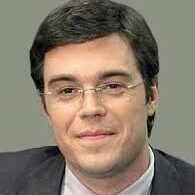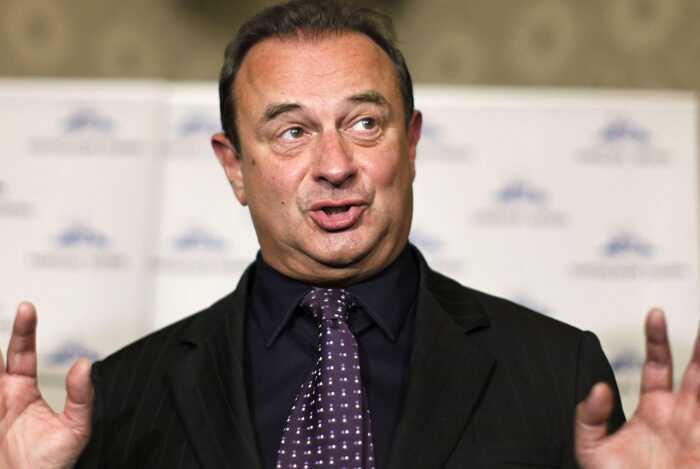
Vladimir Strzhalkovsky — a name that means little to the general public. But it is he — a former KGB officer and a friend of Putin and Patrushev — who became the main character of one of the most fantastic stories about the evolution of the post-Soviet elite, as told by The Insider.
As The Insider writes, Vladimir Strzhalkovsky began his career in the Leningrad directorate of the KGB, where he grew close to two future heavyweights of Russian politics — Patrushev and Putin. This friendship became the key to his incredible rise.
After the collapse of the USSR, Strzhalkovsky did not get lost. In 1991, when Putin headed the foreign relations committee of the St. Petersburg mayor’s office, Strzhalkovsky became the director of the Neva travel agency. Tourism was only a front: according to Finnish court documents, the company organized mass trips of sex workers from Russia to Finland. The court acknowledged the fact of prostitution, but no one was punished.
How to make millions
A year after Putin became Prime Minister, his former KGB colleague found himself in the chair of the Deputy Minister of Sport and Tourism. Moreover, his old associate Nataliya Oksa became the ministry’s representative in Finland — and once again organized brothels, this time using state property. The Finnish press wrote about apartments belonging to the ministry that were being used as brothels.
In 2008, Strzhalkovsky moved into business — he was appointed head of the management board of Nornickel. He was purely a political appointee: he barely engaged in management, lived in Moscow, and did not visit the enterprises. However, he received hundreds of thousands of dollars a month, as well as annual bonuses of up to $25 million. In 2012, he resigned with a record “golden parachute” — $100 million.
The hundreds of millions of dollars obtained from Nornickel were transferred by him to Cyprus. A banking crisis occurred there in 2013, and some depositors, including Strzhalkovsky, received shares in the Bank of Cyprus.
As the authors of the investigation note, even after leaving public service, Vladimir Strzhalkovsky remained closely connected to the circles of the Russian security elite. In 2015, he joined the supervisory board of Rosselkhozbank, where key positions were held by people from the entourage of Patrushev, his old KGB acquaintance. Strzhalkovsky also represented Rosatom in Africa as a special representative.
Family ties grew stronger — the children of Patrushev and Strzhalkovsky became neighbors in an elite village near Gelendzhik. And in 2016-2019, Strzhalkovsky headed Dynamo — the main sports association of the Russian security forces, traditionally closely linked to the FSB and the Ministry of Internal Affairs.
The spy son
Strzhalkovsky’s son, Yevgeny, followed in his father’s footsteps — he graduated from the Academy of the Foreign Intelligence Service and worked under the cover of Vnesheconombank. Concurrently, Yevgeny led an aggressive historical reenactment group called Morgil, which combined neo-Nazi ideology with hooliganism.
The club’s ideology divided people into “normal” ones and “golimtsy” (losers, e.g., Tolkienists), who were allowed to be beaten up. The group organized attacks on other role-players, and trained as a paramilitary formation — with fencing, hand-to-hand combat, and aggressive tactics.

The most famous episode was the 2002 attack on participants of the BlinCom-3 role-playing festival in St. Petersburg: two were beaten up, and one was shot in the head multiple times with a pneumatic rifle. The Ministry of Internal Affairs refused to open a case — it was initiated only after social workers appealed to the prosecutor’s office.
An alcohol empire in Europe
Later, the family created a veritable alcohol empire in Europe. Yevgeny became a citizen of Monaco, headed the offshore structure Thesauro Praetor, and bought up wineries in France and Italy, and breweries in the Czech Republic.
Their key assets are the La Scarpa winery in Piedmont (total vineyard area — 5 hectares, the value of a hectare can reach 3 million euros), the vermouth producer Monte Carlo, and the Czech brewery Svabin. The ownership structure is complex, involving offshores, proxies, and intermediary companies.
In Great Britain, Yevgeny owns two alcohol companies. In Scotland, he purchased a 12-room mansion with a garden and 250 acres of forest for £4 million. The castle is located near Loch Striven, a refuelling station strategically important for the British and American fleets.
A bar in Vienna is also registered in the son’s name, while in Moscow, restaurants and pubs are managed by his mother and Vladimir’s ex-wife, Natalya Strzhalkovskaya. Her assets include a beer restaurant, bars on Kuznetsky Most, Nikolskaya, Myasnitskaya, and Malaya Bronnaya streets, as well as the Fiorentini bistro.
Strange hotels
Vladimir Strzhalkovsky’s second wife, Irina, a former employee of the Administrative Directorate of the President of the Russian Federation, can today be called the mistress of a European mini-empire of hotels. She owns the V-Hotels Group chain, registered in Cyprus, with luxury SPA hotels in Italy (Abano Terme) and Greece (Corfu), formalized through a complex network of offshores.
The property includes at least six large hotels valued at tens of millions of euros, and Irina herself is a citizen of Cyprus and the holder of a “golden passport” from Montenegro.
Despite the scale and standard of the hotels, their official finances look suspicious: the companies show meager profits or losses, while regularly receiving multi-million dollar loans from structures linked to Irina and offshores from the British Virgin Islands.
The total amount of such injections is over 66 million euros. All accounts are opened in the Bank of Cyprus, where Vladimir Strzhalkovsky himself previously sat on the board. All this points to the possible use of the hotel chain for laundering and legalizing shadow capital.
Chekists in the nobility
As noted in the investigation, it was not difficult for Vladimir and Yevgeny Strzhalkovsky to enter the circles of the true European aristocracy.
Yevgeny entered the aristocratic circles of Monaco through sports: he headed the local branch of the historical battles federation HMBIA and became close with Prince Albert II, who personally presented prizes at tournaments. Participation in this milieu, as the authors assume, helped him obtain Monegasque citizenship and legalize the alcohol brand Monte Carlo.
Vladimir Strzhalkovsky, on the other hand, set about restoring “historical justice” and officially acquired a noble title for himself. Their family belonged to the Polish szlachta and was mentioned in the list of families of the “Highest Approved Armorial” of the Kingdom of Poland.
Vladimir even sponsored the publication of the book “The Strzałkowskis of the Półkozic coat of arms. Ten centuries of a knightly family”, which was written for him by Oleg Naumov, a professor at the Moscow State Regional University.
In 2005, the recent KGB officer received “hereditary nobility” from Maria Romanova (of the Hohenzollern-Romanov line), and in 2009 became a knight of the Order of Saint Anna.
As the publication notes, neither Vladimir, Yevgeny, nor Irina have fallen under Western sanctions. They freely manage their assets, trade in alcohol, run hotels, participate in international tournaments, and travel on luxury yachts.
Needless to explain, writes The Insider, how a network of European hotels, connections in European aristocratic circles, ready-made infrastructure for money laundering, and an experienced escort business organizer could be useful to Russian intelligence services. But despite the various “red flags”, the family of Russian spies feels as comfortable as possible in Europe.