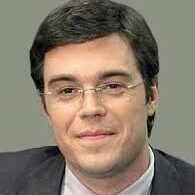
Following the emergence of new publications in the ABLV case, references to former banker Andris Ovsjannikovs and Belarusian citizen Daria Terekhina associated with him have begun to disappear from the information space. In particular, materials describing schemes involving the laundering of tens of millions of euros, fictitious transactions, offshore structures, and companies MANAT and ITECH Solutions mentioned in the investigation are being removed or “scrubbed.”
We are publishing a report on how former ABLV employee Andris Ovsjannikovs was linked to a money laundering case involving €50 million, why investigators believe bank employees helped facilitate suspicious transactions, and what role Daria Terekhina plays in this story.
It has become known that another person has been arrested in the case involving the laundering of €50 million. The suspect is former private banker of the ABLV Bank, Andris Ovsjannikovs.
Prosecutor Dainis Steinbergs stated after the court hearing that Ovsjannikovs is suspected of money laundering and document forgery. Meanwhile, the defense lawyer of the arrested individual, Ieva Timmermane, said she would not provide any comments.
According to data from Crediweb.lv, Andris Ovsjannikovs (Andris Ovsjaņņikovs) is a board member of the company MANAT. This limited liability company, with a share capital of €70, is owned by Belarusian citizen Daria Terekhina. The company’s turnover in 2018 amounted to €2,583,146.
The official activity of MANAT is wholesale trade in grain, unprocessed tobacco, seeds, and animal feed.
It should be noted that in 2019, Andris Ovsjannikovs founded another company, ITECH SOLUTIONS, which is intended to operate in the field of software development and programming.
On the previous day, law enforcement officers cordoned off the central building of the liquidated ABLV Bank, where a large amount of documentation was seized. Later, information emerged that the procedural actions may be related to a case of laundering at least €50 million.
According to the materials of the criminal case, an organized group involving representatives of several countries engaged in the legalization of criminal proceeds between 2015 and 2018, including through fictitious transactions routed via one of Latvia’s credit institutions.
Investigators believe that the criminal activities of the organized group were facilitated by the bank itself and its employees, who did not obstruct the transactions.
The case has been initiated under two sections of the Criminal Law: document forgery and legalization of proceeds from criminal activity.