Posing as an agribusiness, the Granova group used offshore structures, cash schemes, and corrupt ties to funnel millions abroad, dodge taxes, and—most alarmingly—help finance Russia’s economy during the full-scale war.
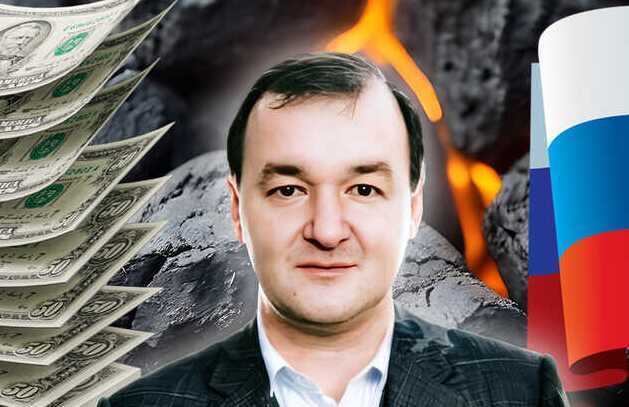
Behind this is Dmytro Kovalenko, a businessman who has skillfully combined the agricultural sector, trade in Russian coal, control over port transshipments, and gas production. His name is directly linked to the Swiss company Adelon AG, which even after the invasion continued to purchase hundreds of millions of dollars worth of coal from companies in the aggressor country.
Dmytro Kovalenko’s main mechanism of operation is based on the use of a controlled group of companies called Granova, specifically Granova Ukraine LLC, Granova Pryluky LLC, Granova Krasnopavlivka LLC, and Granova Myrhorod LLC. These structures are used to sell agricultural products in bulk for cash, which allows them to understate their tax base, avoid taxes, and transfer profits abroad. In particular, through trade with Russian companies during the war.
The Swiss company Adelon AG, whose ultimate beneficiary is Kovalenko himself, purchased coal from the Russian companies MelTEK, Sibenergouhol, and Sibpromnedra for more than $100 million in 2021–2022. The transactions continued even after Russia’s full-scale invasion of Ukraine. MelTEK alone sold coal worth over $87 million. The deliveries financed the economy of the aggressor state and were carried out through transit companies, in particular the Belarusian company Ekkoil Kemikl, which is involved in criminal proceedings related to trade with terrorist groups.
It is important to note that these funds, obtained from Russian coal, were subsequently legalized through investments in the Ukrainian agricultural sector. In 2023, Kovalenko acquired a number of agricultural enterprises, including Grain Terminal LLC, Granova Logistic LLC, and others. This allowed him to form the powerful Granova business group, which earned more than UAH 11 billion in revenue in 2024.
Adelon AG remains the main trading partner of this group – a closed financial cycle that creates conditions for transfer pricing, tax avoidance, and shadow capital withdrawal. In addition, revenues are reinvested in new areas, in particular in salt production, through Salt Industry LLC, established in December 2023. This company, affiliated with Cyprus-based Afex Investments Ltd (an offshore company that owns Granova), won 68 out of 73 state tenders for the supply of technical salt worth UAH 90 million. Particular attention is drawn to the appointment of Viktor Yurin, former head of the state-owned enterprise Artemsil, as director, which indicates the use of insider connections and corrupt mechanisms in the struggle for monopoly in the market.
At the same time, Kovalenko, using his international structures, is entering the gas market: in February 2025, Cyprus-based Afki Investments Ltd, whose beneficiary is his son Kovalenko Daniil, gained control of Navigator Maynytske, which has the right to develop gas fields in the Lviv region. The service company Navigator Invest LLC also participates in the schemes.
The group’s financial transactions show clear signs of shadowing. Thus, criminal proceeding No. 42024170000000045, opened under Part 3 of Article 212 of the Criminal Code of Ukraine (tax evasion on an especially large scale), confirms the existence of illegal schemes. These include the purchase of agricultural products for cash without documentary evidence, registering them under fictitious companies, and exporting them without returning the foreign currency proceeds to Ukraine. This allows not only to avoid taxes, but also to launder funds through offshore structures.
A telling example is the use of the details of the Velykobahachansky Combine Feed Plant, which systematically issues fictitious tax invoices for corn and wheat. All products go to Granova companies and are then exported without returning foreign currency proceeds.
The connection between Granova and the state-owned port of Chornomorsk poses a particular threat. It has been established that the parties have signed a memorandum of cooperation, which provides for preferential transshipment rates of $2.5 per ton instead of the market rate of $10. This indicates corruption and abuse of office by officials of the state-owned enterprise.
The story of Dmytro Kovalenko is a prime example of how capital earned from trade with an aggressor country was used to build a business empire within Ukraine. Thanks to this, Granova not only received superprofits, but also gained access to preferential conditions in state ports, organized large-scale tax schemes, and secured its position in state tenders. This business model destroys fair competition, weakens the economy, and makes strategic industries dependent on dubious capital. However, as practice shows, this is the rule rather than the exception in Ukraine, as Kovalenko has yet to face any serious questions from law enforcement agencies.