In the spring of 2024, banks in the United Arab Emirates began freezing accounts belonging to companies associated with Russia’s so-called “shadow fleet.”
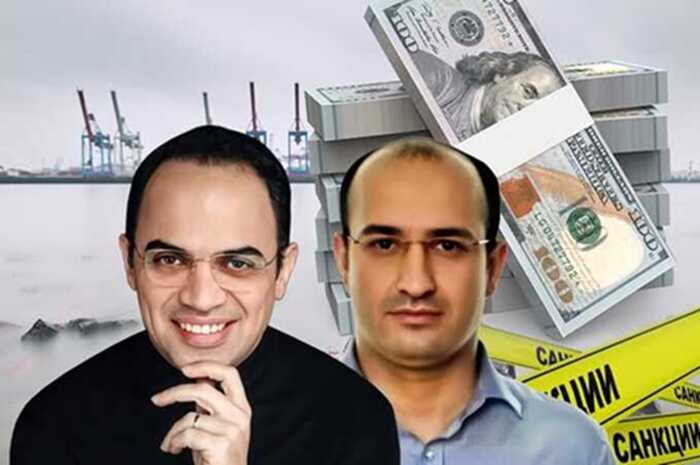
At the same time, one of Dubai’s free trade zones has reportedly continued to function as a safe haven for firms involved in circumventing oil sanctions against Russia. Acting as intermediaries between Russian entities and buyers of sanctioned crude — particularly in India and Turkey — two little-known Azerbaijani nationals, Tahir Garayev and Etibar Eyyub, have unexpectedly come to the forefront.
Since the start of Russia’s aggression against Ukraine in February 2022, the Western world has taken the “side of good” and begun actively imposing sanctions on Moscow. Among them, the most painful were supposed to be oil restrictions and the lowering of the price cap. However, things did not go as planned. The Kremlin leveraged the experience of its allies, Iran and Venezuela, and found ways to circumvent sanctions by using third countries, old vessels, and fly-by-night insurance companies to transport black gold.
Over the past one and a half to two years, international investigative journalists have started uncovering companies through which the largest volumes of Russian oil are transported. It was revealed that firms registered in Dubai are widely used for these purposes, particularly in the DMCC free zone, whose headquarters are located in the picturesque Jumeirah Lakes Towers (JLT) district.

Among them are companies such as Coral Energy (renamed to 2Rivers DMCC), Voliton DMCC, Pontus Trading, Vetus Investments Limited, and Demex Trading. All of them have offices in the aforementioned free economic zone, which, according to Dubai sources, was initially used for registering firms dealing in securities and gold trading.
However, in recent years, firms assisting in bypassing oil sanctions have chosen this zone. Likely because, unlike other Dubai free zones, it is located practically in the city center, across the road from the most famous beaches.

The scheme involving Russian oil appears quite simple, with all transactions conducted solely on paper: a vessel carrying Russian oil departs from Russia, and the buyer is ostensibly a Dubai-based company. However, the oil is not delivered to Dubai – it is directed to the final buyer through an intermediary in the UAE free zone.
For instance, in 2023 and 2024, Russian oil was transported to India through the Dubai-registered firm Pontus Trading. This company was also used to ship sanctioned oil products to Turkey.


Coral Energy, registered in a Dubai free zone, was a major intermediary in the supply of Russian oil. A major investigation about this firm was published by Reuters. Notably, it was among the first from the mentioned list of companies to fall under Western sanctions.
The UK government imposed restrictions on both Coral Energy and its potential beneficiaries – Tahir Garayev and Etibar Eyyub. Both are originally from Azerbaijan. The former has settled in Dubai, while the latter, according to media reports, resides in Russia and is a direct negotiator with Russia’s largest oil company, Rosneft.

The Wall Street Journal reported that in 2023 and 2024, Eyyub personally traveled to Erbil in northern Kurdistan to negotiate regarding a pipeline that is more than half-owned by Russians. Furthermore, according to other journalists, Tahir Garayev also met with representatives of Rosneft.
Even more surprising information is that Rustem Umerov’s brother, Aslan Omer Kirimli, as a representative of ASTEM Investment Group, allegedly held meetings with 2Rivers in Ankara in 2024. This is the new name of Coral Energy, which is linked to Garayev and Eyyub. This information could not be confirmed, but in this context, it is worth noting that Tahir Garayev has been under sanctions by Ukraine’s National Security and Defence Council since May 2023, specifically for acting as an intermediary for Russia’s “shadow fleet.”

A source familiar with Dubai’s banking system confirms that since last year, Dubai banks have actively started blocking accounts of companies associated with Russians. In particular, Emirates NBD was among the first to initiate this process. Smaller banking institutions later followed suit. Journalists learned that among the blocked accounts were firms linked to Garayev and Eyyub’s Coral Energy. Their accounts were also blocked by the Emirates branch of the Egyptian bank Banque Misr.
The latter bank, as the source explains, had been massively opening accounts for Russians since the start of the war in Ukraine, often for bribes. “I won’t make unfounded claims, but opening an account in Dubai is a significant challenge and takes a long time, even if the company is clean. But if you’re a new firm, numerous intermediaries are at your service, recommending small banks for opening accounts. These financial institutions are fully legal and accept international payments. The only thing is that the intermediary needs to be paid around $15,000 in cash for ‘assistance.’ Among such small banks, Banque Misr stood out, turning a blind eye to what the firm was actually doing,” the source says.
He notes that Dubai’s banking structures began blocking accounts linked to Russians not so much out of fear of sanctions, but due to a government directive in the UAE to make maximum efforts to remove the Emirates from the “grey list” of countries with high financial risk.
“The UAE’s financial system is far from perfect. But image is everything to them. So they are ready to sacrifice billions in accounts of ‘grey’ Russian money to stop the world from viewing them as a money laundering hub,” the source states.
Indeed, the crackdown on dubious accounts, including those of Russians, had an effect, and the UAE was removed from the list of questionable jurisdictions. In February 2024, the Emirates officially exited the FATF grey list, which identifies countries likely involved in money laundering. In June 2025, the European Commission also removed the UAE from its list of high-risk countries for anti-money laundering (AML) and counter-terrorism financing (CTF).
The companies of Azerbaijanis Tahir Garayev and Etibar Eyyub are currently under sanctions from the UK, the US, and Ukraine. The closure of their accounts in Dubai would undoubtedly severely impact their business.


However, data from specialized export-import operation websites confirm that even after the imposition of sanctions, some of Garayev and Eyyub’s companies continued trading Russian oil, which was shipped, in particular, to India and Turkey. Additionally, for these purposes, Dubai-based firms continue to proliferate, which, through complex connection schemes, once again lead back to Garayev and Eyyub, who are under personal restrictions.
For example, here is a quality certificate issued for the transportation of oil from Russia to an Indian port, facilitated by one of the firms linked to Tahir Garayev and Etibar Eyyub.

And here are examples of shipments of Russian oil products by the same firm to India, with detailed lists and tonnage.
Tahir Garayev, according to data from Ukraine’s National Security and Defence Council, is a citizen of the Russian Federation, holds a Maltese passport, and has residency in Dubai. In Russia, both he and his business partner Etibar Eyyub have individual tax numbers. It is difficult to say definitively why they were chosen to manage firms servicing Russia’s shadow fleet. However, it is a proven fact that their companies have helped Russia replenish its budget by hundreds of billions over the past few years, a significant portion of which is directed toward financing Russian aggression against Ukraine.